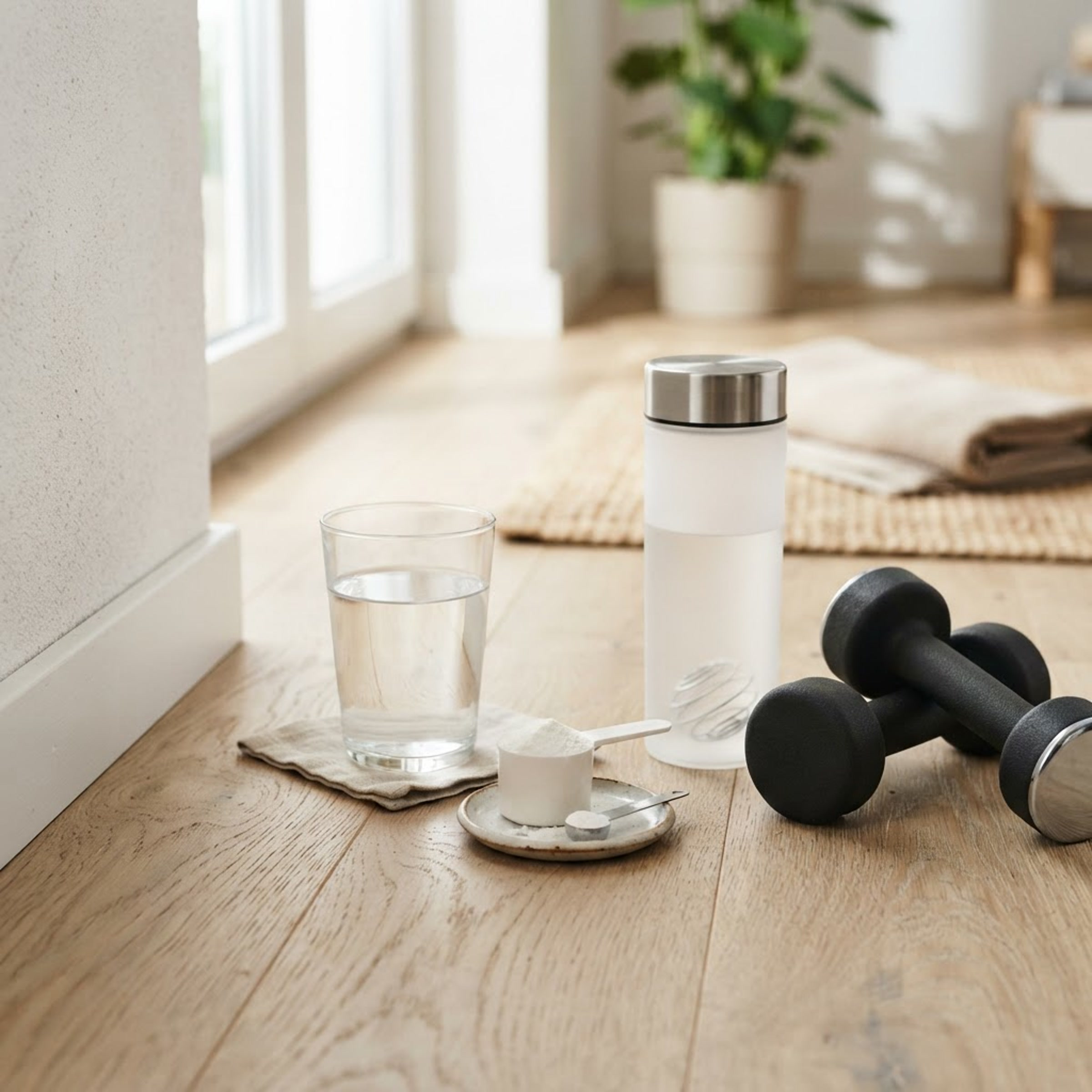
Creatine for healthy aging is no longer just a topic for competitive athletes. As adults look for practical ways to preserve strength, mobility, and mental performance with age, creatine monohydrate has become one of the most studied options in sports nutrition. The important question is not whether it is trendy, but whether the evidence supports everyday use for people over 40.
The short answer is encouraging: creatine can help increase high-intensity exercise capacity and lean-mass gains when paired with resistance training, and emerging research suggests possible benefits for cognition under stress or sleep deprivation. It is not a hormone, fat burner, or cure-all. Think of it as a tool that may make a good training and nutrition plan work a little better.
What creatine does in the body
Your muscles store creatine as phosphocreatine. During short, demanding efforts—such as standing from a chair repeatedly, climbing stairs, or lifting weights—phosphocreatine helps regenerate ATP, the immediate energy currency of muscle cells. Food supplies some creatine, especially meat and fish, while the body makes the rest from amino acids.
Muscle creatine stores can fall with age, lower meat intake, inactivity, or certain medical conditions. Supplementation raises those stores gradually. That does not mean the supplement directly “builds muscle” without training; rather, it can support repeated effort so you can complete quality work and recover between sessions.
Potential benefits after 40
1. Better support for strength training
Resistance training is one of the most reliable ways to protect muscle and bone as we age. In a meta-analysis of older adults, creatine combined with resistance training improved strength and lean tissue more than training alone, although results varied between studies. The practical takeaway is modest but useful: creatine may amplify a proven habit, not replace it.
For context, this works alongside the basics covered in our natural ways to support testosterone after 40 guide and our evidence-based look at testosterone boosters. Training, adequate protein, sleep, and a healthy body composition remain more important than any single powder.
2. Help with muscle preservation
Age-related muscle loss is influenced by inactivity, inadequate protein, illness, and reduced responsiveness to dietary amino acids. Creatine may help preserve or increase lean mass when adults also perform progressive resistance exercise. Some of the scale increase after starting comes from water stored inside muscle cells; that is not the same thing as fat gain, and it is a normal effect.
3. Possible cognitive support
The brain also uses creatine for energy buffering. Small trials suggest supplementation may help some aspects of memory or reasoning, especially in vegetarians, older adults, or people experiencing sleep loss. The cognitive evidence is promising but less settled than the strength evidence. It should not be marketed as a treatment for dementia, depression, or any neurological condition.
4. A practical recovery option
Creatine is not a stimulant and does not provide an immediate “boost.” Its potential value comes from consistent use over weeks. That makes it compatible with a sustainable routine, especially if your goal is to train regularly rather than chase dramatic short-term sensations.
How much creatine should you take?
For most healthy adults, 3 to 5 grams of creatine monohydrate daily is the simplest approach. There is no need to cycle it. A loading protocol of about 20 grams per day split into four doses for 5–7 days can raise stores faster, but it is optional and more likely to cause temporary bloating or stomach upset.
- Choose plain creatine monohydrate; it has the strongest evidence and is usually the best value.
- Take it at a time you can remember. Consistency matters more than a precise “anabolic window.”
- Mix it with water or a meal and maintain normal hydration.
- Expect any scale increase to be gradual and mostly related to water held in muscle.
Safety, kidneys, and common concerns
Research in healthy adults has not shown recommended-dose creatine to damage kidney function. Blood creatinine can rise because creatine is metabolized into creatinine, a laboratory marker; that change does not automatically mean kidney injury. Still, anyone with kidney disease, unexplained abnormal kidney tests, pregnancy, or complex medical conditions should speak with a clinician before using it.
Possible side effects include gastrointestinal discomfort, especially with large loading doses. Splitting the dose, taking it with food, or using 3 grams daily can make it easier to tolerate. Supplements can also vary in quality, so choose a product with independent testing when possible.
Pair creatine with the fundamentals
Creatine cannot compensate for chronic sleep deprivation, very low protein intake, or an exercise plan that never progresses. Aim for regular resistance training, daily movement, and enough protein distributed across meals. Our guide to magnesium, sleep, and recovery explains why rest matters, while our anti-aging supplement review puts creatine in perspective among other popular products.
If you eat little or no meat, the response to creatine may be more noticeable because baseline muscle stores can be lower. That does not make supplementation mandatory; it simply gives a reasonable explanation for why some people report a larger benefit than others.
What the research says
Key evidence includes the position stand from the International Society of Sports Nutrition (Kreider et al., Journal of the International Society of Sports Nutrition, 2017), randomized trials in older adults combining creatine with resistance training, and systematic reviews examining strength and lean mass. A 2022 meta-analysis in Journal of Cachexia, Sarcopenia and Muscle reported benefits for some strength and body-composition outcomes when creatine was paired with resistance exercise. Results are not identical for everyone, and long-term studies in specific medical populations are still needed.
Bottom line
Creatine monohydrate is one of the better-supported supplements for adults who want to preserve strength and muscle as they age. Start with 3–5 grams daily, train consistently, eat enough protein, and ask your healthcare professional for individual advice if you have kidney concerns or take medications. It is a useful addition to healthy aging—not a replacement for the habits that do most of the work.
This article is educational and not a diagnosis or individualized medical recommendation.
How to build a simple creatine routine
Many supplement plans fail because they are too complicated. A useful routine can be as simple as placing the creatine container beside the breakfast items you already use. Take one level scoop according to the product label, record it in your habit tracker for the first few weeks, and then let the routine become automatic. Missing one day is not dangerous; simply resume the normal daily amount rather than doubling up.
Pair the supplement with a training plan that has measurable but gradual progression. Two or three full-body sessions per week can include a squat or sit-to-stand pattern, a hinge such as a deadlift variation, a pushing movement, a pulling movement, and a loaded carry. Start with a weight that allows controlled repetitions and leave room to improve. Older adults or anyone returning after illness should get individualized guidance from a qualified professional.
Creatine and body weight
Some people notice a small increase on the scale during the first few weeks. Creatine draws water into muscle cells, which can support the environment for training but is not the same as swelling or fat gain. If you are monitoring body weight for a medical reason, track waist measurement, strength, energy, and how clothing fits alongside the scale. People with heart failure, fluid restrictions, or kidney disease should discuss any supplement with their clinician first.
Choosing a trustworthy product
Look for a short ingredient list that identifies creatine monohydrate and provides a clear serving size. Independent certification or batch testing can reduce the risk of contamination, but no label can guarantee that a supplement is appropriate for every person. Avoid products that promise dramatic hormone changes, rapid fat loss, or protection from multiple diseases. Those claims go beyond the evidence and often signal an unnecessarily expensive formula.
Questions to ask before starting
- Do I have kidney disease, abnormal kidney tests, or a fluid restriction?
- Am I taking medicines that require monitoring of kidney function or hydration?
- Can I commit to regular resistance exercise and adequate food?
- Will my healthcare professional know I am using it before routine blood work?
These questions keep the decision grounded in your health rather than marketing. For most healthy adults, plain creatine monohydrate at a modest daily dose has a favorable evidence and safety profile. The biggest gains in healthy aging still come from sleep, movement, nutritious food, social connection, and preventive healthcare.
Keep expectations realistic
Creatine works best as a long-term support strategy. Benefits may be subtle at first, and not everyone responds in the same way. Review progress after eight to twelve weeks of consistent training rather than judging the product after a single workout. If there is no improvement, check your program, protein intake, sleep, technique, and recovery before automatically increasing the dose.
Finally, remember that supplement decisions should fit your values and budget. If paying for creatine would displace groceries, a gym membership, or a medical appointment, prioritize those essentials. If it fits comfortably, choose the simplest evidence-based option and review it with your clinician when you have questions.
Leave a Reply