What Is Shilajit and Why Is Everyone Talking About It?
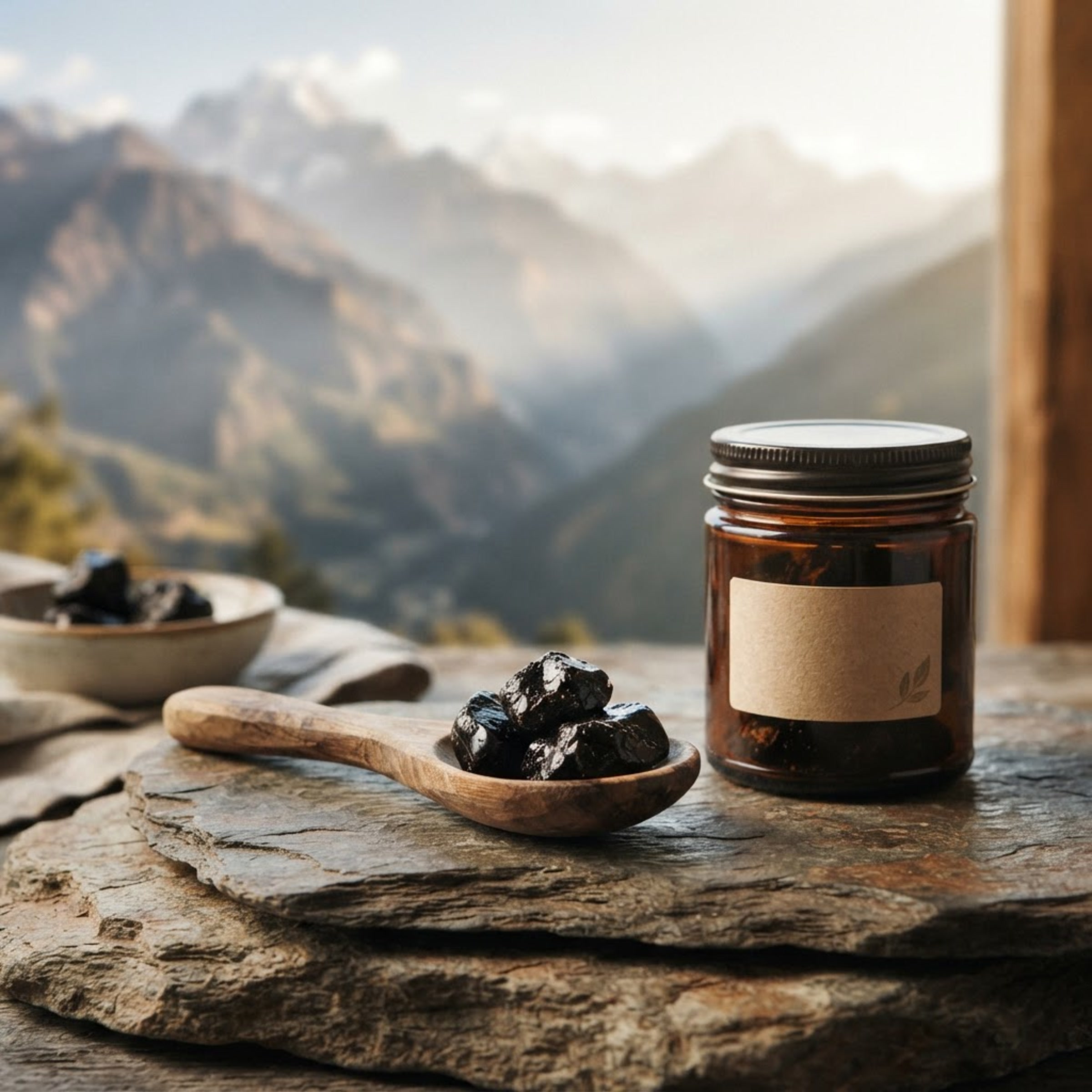
Shilajit is a sticky, tar-like resin that seeps from cracks in high-altitude rocks in the Himalayas and other mountain ranges. It forms over centuries from the slow decomposition of plant matter trapped between layers of rock. Used for thousands of years in Ayurvedic medicine, where it is called the “destroyer of weakness,” shilajit has recently become one of the most searched supplements in the men’s health and healthy aging space.
Modern research suggests this enthusiasm is not entirely hype. Shilajit contains two groups of compounds scientists consider the active players: fulvic acid and a family of molecules called dibenzo-alpha-pyrones. Fulvic acid typically makes up 50 to 80 percent of purified shilajit and is believed to drive most of its effects on energy, mineral transport, and antioxidant activity.
This guide reviews what controlled human studies actually show about shilajit, from testosterone to cellular aging, and how to choose a product that is both effective and safe.
Shilajit and Testosterone: What the Human Research Shows
The headline study on shilajit and male hormones was published in the journal Andrologia in 2016. In this randomized, double-blind, placebo-controlled trial, healthy male volunteers took 250 mg of purified shilajit twice daily for 20 weeks. By the end of the study, total testosterone levels had risen roughly 20 percent versus a much smaller change in the placebo group. The researchers also reported improvements in key semen quality markers in a companion analysis.
How could a mineral resin raise testosterone? The proposed mechanism matters, because shilajit is not a hormone and does not work like an anabolic steroid. Researchers believe compounds in shilajit support the testes’ own steroidogenic machinery: the enzymes that convert cholesterol into testosterone. In preclinical studies, purified shilajit increased the expression of enzymes such as StAR and P450scc inside Leydig cells, effectively helping the body’s natural production line run more efficiently. Follicle-stimulating hormone levels were also measured, pointing to effects along the hypothalamic-pituitary-gonadal axis rather than at a single point.
A realistic takeaway: shilajit appears in early human research to nudge testosterone upward in healthy men, with an effect size meaningful over months of use, not days. It is not a replacement for medical treatment of clinically low testosterone, which requires diagnosis and supervision.
Shilajit alongside other evidence-backed nutrients
Testosterone production depends on an entire nutrient network. zinc is one of the best documented minerals for testosterone, and correcting a shortfall has clear benefits for hormone output. Adaptogens can also help, particularly when stress is suppressing the hormonal axis. Research on ashwagandha shows meaningful testosterone and stress hormone improvements in several controlled trials. Shilajit stacks naturally with both, which is why it now appears in many of the better formulated testosterone supplements on the market.
Energy, Mitochondria, and the CoQ10 Connection
Beyond hormones, shilajit has been studied for physical energy and fatigue. Here the science involves mitochondria, the tiny power plants that convert food into usable energy. Fulvic acid appears to support mitochondrial function in two ways: by improving the delivery of nutrients and oxygen into cells and by protecting mitochondrial membranes from oxidative damage.
Several trials have explored shilajit combined with CoQ10, the antioxidant that mitochondria use in energy production. In a study of volunteers performing sustained physical exertion, the shilajit-plus-CoQ10 combination outperformed CoQ10 alone on markers of energy metabolism and recovery, suggesting the two compounds are complementary. This is also why shilajit is increasingly marketed to active men over 40, whose natural CoQ10 production declines with age.
Shilajit and Healthy Aging: The Cellular Story
Shilajit’s fulvic acid fraction is a potent antioxidant. Preclinical studies show it scavenges free radicals and protects cell membranes. Because oxidative stress is the first step toward almost every age-related disease, this mechanism has generated interest in shilajit as a longevity supplement.
Brain health and protein misfolding
One of the more intriguing areas of shilajit research involves tau fibrillization, the process of protein misfolding implicated in Alzheimer’s disease. In laboratory studies published in the early 2010s, fulvic acid inhibited the formation of tau fibrils and destabilized preformed ones. Human data does not yet exist, so no supplement claims can be made about cognitive disease, but the preclinical signal is one reason shilajit features in the science-based anti-aging supplement category alongside compounds like NAD+ precursors and creatine. For a deeper look at cellular aging science, see our guide on NMN and NAD+, the science behind cellular anti-aging supplements.
Safety First: The Heavy Metal Issue That Separates Good Products from Bad Ones
Raw, unprocessed shilajit can be problematic. Because it leaches through rock, unpurified resin can carry lead, mercury, and arsenic. Traditional preparation methods involved extensive purification precisely because of this. Modern, reputable suppliers use standardized extraction processes (often referred to as purified shilajit) and test every batch for heavy metals.
Practical rules for choosing a shilajit supplement:
- Look for “purified shilajit” or a standardized fulvic acid content (often 50 percent or higher) on the label.
- Documents matter: choose brands that publish third-party certificates of analysis for heavy metals.
- Resin, powder, or capsules: all can work; capsule products labeled with fulvic acid percentage tend to be the most standardized.
- Avoid absurdly cheap products: genuine shilajit is expensive to source and purify.
Dosage and How to Use Shilajit
The dose used in positive human studies has generally been about 250 mg of purified shilajit taken twice daily with meals, for a total of 500 mg per day. Effects on testosterone took 20 weeks to reach significance, so consistency over months is more important than the exact hour of day you take it. Shilajit is generally well tolerated in these studies; occasional mild digestive discomfort is the most commonly reported side effect.
- Take it with food to minimize digestive upset.
- Pair with training and nutrition: no supplement substitutes for resistance exercise, adequate sleep, and sufficient protein, the foundations covered in evidence-based stress and sleep recovery guidance.
- Cycle decision: human trials have used continuous daily dosing for up to 20 weeks without reported adverse trends, so cycling is optional rather than mandatory.
Who Should Be Cautious
People with hemochromatosis (iron overload) should speak with a physician before using shilajit, since fulvic acid can enhance iron transport. Anyone with kidney disease, women who are pregnant or breastfeeding, and anyone taking medications that affect hormone levels should get medical clearance first. As with any supplement, shilajit is not a substitute for diagnosis and treatment of clinically low testosterone.
Shilajit for Women, Sleep, and Recovery: Other Emerging Research Areas
Most shilajit marketing targets men, but the compound is not gender-specific in its basic biology. Fulvic acid’s nutrient-transport and antioxidant effects apply to everyone, and Animal Traditional Medicine research (Ayurveda’s Materia Medica) describe shilajit as a general rejuvenative rather than a male-only tonic. That said, the controlled human testosterone trial was conducted in men, and hormone data in women is essentially absent. Women who are interested in mitochondrial or antioxidant support can reasonably consider it, but anyone with conditions sensitive to androgens, such as certain forms of hair loss or acne, should first discuss it with a physician.
Altitude, fatigue, and recovery findings
Some of the earliest modern interest in shilajit came from studies at high altitude. In one controlled study carried out at extreme elevation, volunteers received a combination of shilajit and CoQ10 for 15 days while undergoing sustained physical exertion. The combination group maintained better energy-related blood markers and showed less disruption in stress hormone patterns than placebo, consistent with the mitochondrial-support hypothesis. Small studies in athletes have also pointed toward improved post-exercise recovery markers, though sample sizes remain modest and replication is needed before strong claims.
A Simple, Realistic Shilajit Protocol
Putting the research together, here is what an evidence-aligned approach looks like in practice:
- Week 1: 250 mg once daily with breakfast to assess tolerance.
- Week 2 onward: 250 mg twice daily with meals, the dosing pattern from the clinical literature.
- Training days: take one dose 30 to 60 minutes before training if you prefer an energy-centered rationale.
- Benchmark at 12 and 20 weeks: the strongest trial data is at 20 weeks, so judge results on that timeline, not after a week.
- Pair with basics: resistance training 3-4 times weekly, 7-9 hours of sleep, adequate protein, and minimal alcohol produce a much larger hormone effect than any single supplement.
Common Questions About Shilajit
Does shilajit work immediately?
Most users report subtle energy changes within the first two weeks, but the meaningful, measurable effects in the clinical literature, especially for testosterone, developed over 10 to 20 weeks of daily use.
Can shilajit be taken with other supplements?
Yes. It is commonly stacked with zinc, ashwagandha, CoQ10, and magnesium without known interactions in healthy adults. If you take blood thinners, iron supplements, or medications for blood pressure, check with your pharmacist first, since mineral-type supplements occasionally interact with absorption or drug metabolism.
Resin versus capsules, which is better?
Purity and third-party testing matter far more than form. Traditional resin is harder to dose and handle, while standardized capsule powders offer consistent fulvic acid percentages. Choose whichever you will actually take consistently.
The Bottom Line on Shilajit
Shilajit earns its place among the most interesting supplements for men’s hormone health and aging. The strongest human evidence sits at the intersection of testosterone, mitochondrial energy, and antioxidant protection. The 2016 controlled trial showing roughly 20 percent higher testosterone after 20 weeks of 500 mg per day is genuinely notable, even if it needs replication in larger populations.
Choose a purified, third-party-tested product, take it consistently, frame expectations in months rather than days, and combine it with the training, sleep, and nutrition basics that do the heavy lifting. That is the honest, science-based way to use shilajit as part of a long-term men’s health strategy.
This article is for informational purposes only and does not constitute medical advice. Consult a qualified healthcare provider before starting any supplement, especially if you have a medical condition or take medications.
Leave a Reply