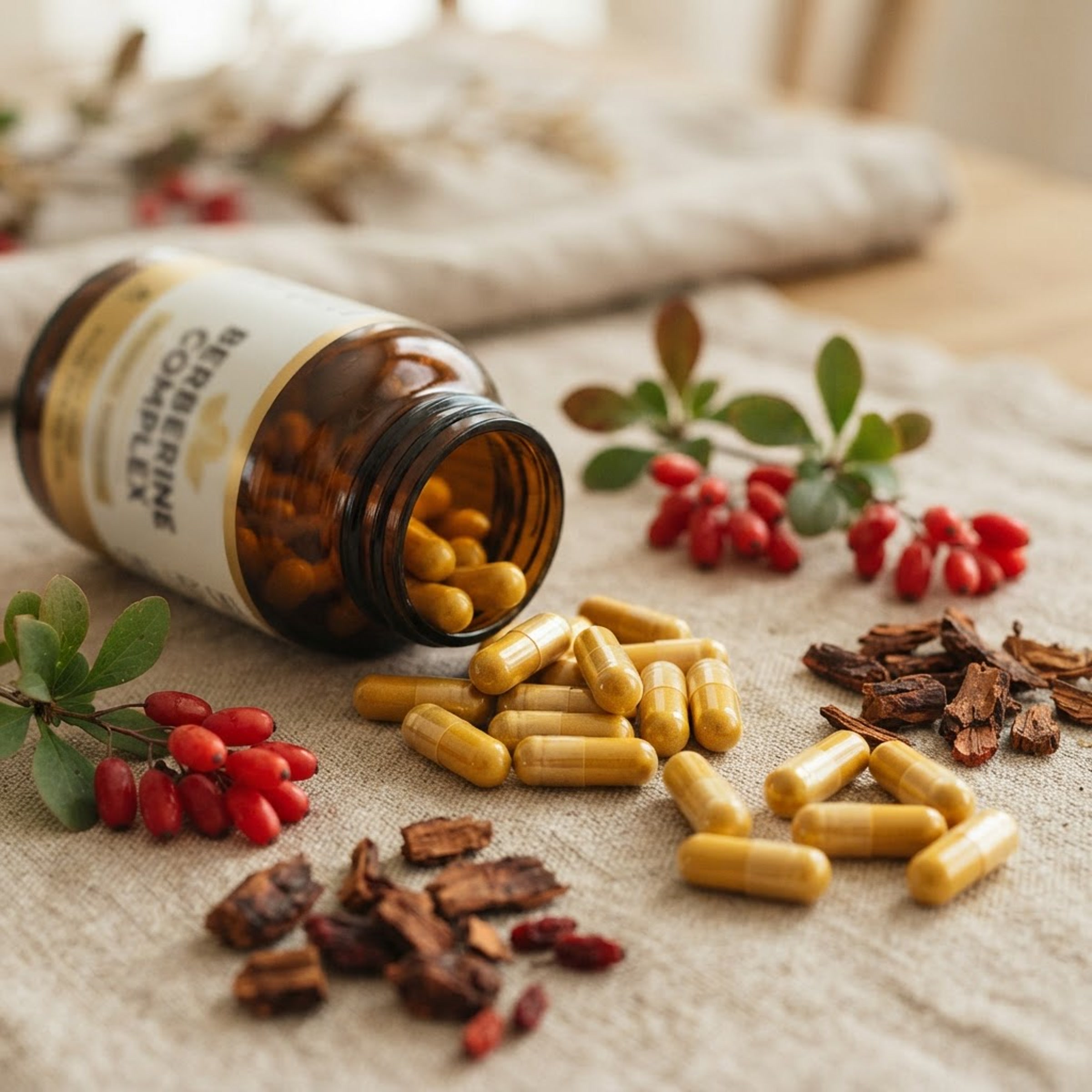
What Is Berberine?
Berberine is a bright yellow plant alkaloid found in herbs like barberry, goldenseal, Oregon grape, and the Chinese herb Coptis chinensis. It has been used in traditional Chinese and Ayurvedic medicine for hundreds of years, mainly for digestive infections and diarrhea. Modern science caught up when researchers discovered that berberine is one of the few natural compounds with a clearly documented effect on blood glucose and lipid metabolism in human trials.
In 2023, a wave of social media videos called berberine “nature’s Ozempic,” and searches exploded. But the phrase compresses a lot of nuance into three words. This guide reviews what controlled studies actually show, how berberine works in the body, and where it genuinely fits in a metabolic health strategy.
How Berberine Works: The AMPK Connection
The best-documented mechanism behind berberine is its activation of AMP-activated protein kinase, or AMPK. AMPK is often called the body’s metabolic master switch: it senses low cellular energy and responds by increasing glucose uptake into muscles, promoting fat burning, and reducing glucose production in the liver. Metformin, the first-line type 2 diabetes drug, also works through AMPK, which explains why berberine is often described as having metformin-like activity.
Two additional mechanisms add to the picture:
- Gut microbiome effects: berberine alters the gut bacterial population and increases short-chain fatty acid production, which independently improves insulin sensitivity.
- Modest incretin effects: some studies show berberine increases GLP-1 secretion from intestinal cells, the same hormone targeted by blockbuster weight-loss medications. The effect is real but modest, which matters for the “nature’s Ozempic” comparison we make below.
- Lipid regulation: berberine upregulates LDL receptor expression in the liver, helping clear LDL cholesterol from the blood, a mechanism distinct from statins.
The Evidence on Blood Sugar
The foundational trial was published in the journal Metabolism in 2008 by Yin and colleagues. In adults with type 2 diabetes, 500 mg of berberine three times daily for three months lowered HbA1c from an average of about 9.5 percent to 7.5 percent, with improvements in fasting glucose, triglycerides, and insulin sensitivity comparable to metformin in the same trial design. Several meta-analyses since then, pooling thousands of patients across randomized trials, support the direction and rough size of that effect: berberine reliably lowers HbA1c, fasting glucose, and insulin resistance markers.
Meta-analytic estimates put the average HbA1c reduction from berberine in the range of 0.4 to 0.7 percentage points, alongside decreases in fasting glucose and triglycerides. Those numbers are meaningful, but note the populations: most positive trials enroll people who already have elevated glucose. If your blood sugar is normal, berberine is unlikely to produce dramatic benefits, and research in healthy people is thin.
The Evidence on Weight and Lipids
On body weight, the honest summary is that berberine helps modestly. Meta-analyses of randomized trials report weight loss in the range of 2 to 4 kilograms over 8 to 12 weeks, along with reductions in waist circumference, blood pressure, and LDL cholesterol. Lipid improvements appear to be berberine’s most consistent strength, with multiple meta-analyses showing lower total cholesterol, LDL, and triglycerides.
That is a genuinely useful cardiometabolic profile for a natural product. It is also, importantly, not an anti-obesity medication level of effect.
Berberine vs. GLP-1 Medications: An Honest Comparison
GLP-1 receptor agonists like semaglutide produce 10 to 15 percent body weight loss in pivotal trials and carry robust cardiovascular and diabetes data. Berberine produces a fraction of that weight effect through overlapping but weaker biological pathways. Calling it “nature’s Ozempic” is marketing shorthand, not a scientific equivalence.
The fair framing looks like this:
- On prescription GLP-1s: berberine is not a substitute and should not replace prescribed medication without a physician’s involvement. If you are already on a GLP-1, berberine adds gastrointestinal side-effect risk without proven added benefit; our guide on protecting muscle during GLP-1 weight loss covers what actually matters in that situation: protein and resistance training.
- On prescription for blood sugar control versus being pre-diabetic: berberine sits in a gray zone where evidence suggests benefit, but guidance from a physician who knows your numbers is essential.
- Compared with other supplements: berberine has among the strongest human metabolic data of any non-prescription compound, which is why it earns a place in science-based supplement roundups such as our best anti-aging supplements guide.
Dosage, Side Effects, and Interactions
The doses used in positive trials are consistently 500 mg two to three times daily, taken with meals. Gastrointestinal side effects, mainly constipation, diarrhea, cramping, and gas, are the most common complaints, and they often settle within the first week.
Safety considerations that genuinely matter:
- Drug interactions: berberine inhibits CYP3A4 and CYP2D6 and can raise levels of drugs metabolized by those liver enzymes, including statins and several blood pressure and anticoagulant medications. If you take prescription drugs, talk to a pharmacist or physician before starting.
- Pregnancy and breastfeeding: berberine can cross the placenta and is unsuitable in pregnancy.
- Blood sugar medications: combining berberine with glucose-lowering drugs can push blood sugar low, so medical supervision is non-negotiable.
- Absorption: berberine has notoriously low bioavailability; some products pair it with milk thistle (silymarin) or alpha-lipoic acid to improve uptake.
How Berberine Fits a Bigger Metabolic Picture
A single compound is never the whole story. Berberine deserves its reputation as one of the best evidence-backed supplements for glucose and lipid metabolism, but the metaphorical roof holds up only with pillars in place:
- Fatty fish, olive oil, and fiber-rich plants deliver independent cardiometabolic benefits; our review of omega-3 fish oil for heart and brain health is a good starting point.
- Vitamin D adequacy supports insulin sensitivity, a connection explained in our vitamin D and hormone health guide.
- Sleep and cortisol control remain underrated levers on blood glucose; the principles in our evidence-based cortisol and sleep guide apply directly to metabolic health.
Should You Try Berberine?
- Consider it if: you have elevated fasting glucose or HbA1c (prediabetes territory), elevated LDL, or a metabolic syndrome pattern, and your doctor agrees.
- Think twice if: you are pregnant, take multiple prescription medications, or expect Ozempic-level results from a capsule.
- Skip it if: you want marketing promises instead of physiology; 2 to 4 kilograms over three months is the honest expectation.
A Brief History: From Traditional Remedy to Study Subject
Berberine’s modern journey is unusual. Chinese researchers began systematically studying it in the 1980s for infectious diarrhea, and its glucose effects surfaced in diabetic patients using it alongside treatment for gastrointestinal illness. Those early observations led directly to formal metabolic trials starting around 2004, culminating in the influential 2008 study and a steady stream of randomized trials since. In 2020s analyses, berberine remains among the most frequently studied natural compounds in metabolic medicine, which is precisely why the social media wave had so much raw material to work with.
What to Expect: A Realistic 12-Week Timeline
- Days 1 to 3: possible mild GI adjustment, loose stool or cramping, usually mild and typically resolving within the first week.
- Weeks 1 to 4: early shifts in fasting glucose readings in some people; appetite changes are sometimes reported but vary widely.
- Weeks 4 to 8: trial data on lipids and insulin markers begin to differentiate from placebo in this window.
- Weeks 8 to 12: most published endpoints, including weight, waist circumference, HbA1c, and LDL, are measured around here.
Taking berberine for two weeks and quitting is like planting a seed and digging it up daily to check growth.
How to Choose a Quality Berberine Supplement
- Standardized berberine HCl is the form used in virtually all positive trials; exotic “enhanced” forms with dramatic marketing claims deserve skepticism unless the brand provides study data.
- 500 mg capsules make it simple to follow the two to three times daily protocol.
- Third-party testing for purity and heavy metals is the baseline standard for anything you take daily for months.
- Combo products pairing berberine with silymarin or alpha-lipoic acid have absorption rationale; just check total berberine dose matches the studied range.
Frequently Asked Questions About Berberine
Is berberine safe long term?
Trial durations run mainly from 8 weeks to 6 months, with good tolerability reported. Long-term, multi-year safety data comparable to prescription drugs does not exist, which is one more reason to involve a physician if you plan sustained use, particularly with regular lab monitoring.
Can I take berberine with metformin?
Only under medical supervision. Both lower glucose through overlapping pathways, and the combination raises hypoglycemia and side-effect risks, though some clinicians do use them together deliberately.
Does berberine break a fast?
Berberine contains no meaningful calories and does not break a fast metabolically. That said, taking it with meals matches the study protocols and reduces the chance of stomach upset.
The Bottom Line
Berberine is one of the few natural compounds with multiple randomized trials and meta-analyses behind it for blood sugar, insulin resistance, and lipids. The “nature’s Ozempic” label overpromises, but the underlying science is legitimately interesting: AMPK activation, gut microbiome effects, and LDL clearance mechanisms with clinically meaningful effects on metabolic markers. Take the standard 500 mg with meals if it fits your situation, keep expectations calibrated to the actual data, and treat it as one tool in a lifestyle-based metabolic strategy rather than a shortcut.
This article is for informational purposes only and is not medical advice. Consult a qualified healthcare provider before starting berberine, especially if you take prescription medications or have a medical condition.
Leave a Reply