Growth hormone (HGH) is the reason you recovered quickly in your twenties, and its decline is a big part of why recovery slows after 40. Your body still makes HGH every night, but the pulse sizes shrink with age. The good news: GH release responds strongly to lifestyle, and you do not need injections to recover a meaningful share of what you have lost.
What Growth Hormone Does After 40
Growth hormone stimulates tissue repair, muscle protein synthesis, fat metabolism, and collagen production. It works mostly through IGF-1, which mediates its effects on muscle and connective tissue. GH is released in pulses, and the largest pulses happen during deep sleep. After 40, both the pulse amplitude and total secretion decline steadily, one of the measurable markers of biological aging.
Lever 1: Deep Sleep Is Non-Negotiable
The majority of daily GH is secreted in the first deep-sleep cycle. Protect that first 90 minutes: consistent sleep schedule, a cool dark room, no alcohol close to bedtime (it suppresses deep sleep and GH by up to 70 percent in some studies), and no heavy meals within 2-3 hours of bed. Poor sleep also raises cortisol and lowers testosterone (our guide to sleep and testosterone). Magnesium taken in the evening can improve sleep quality (magnesium glycinate for sleep).
Lever 2: Train Hard, Rest Properly
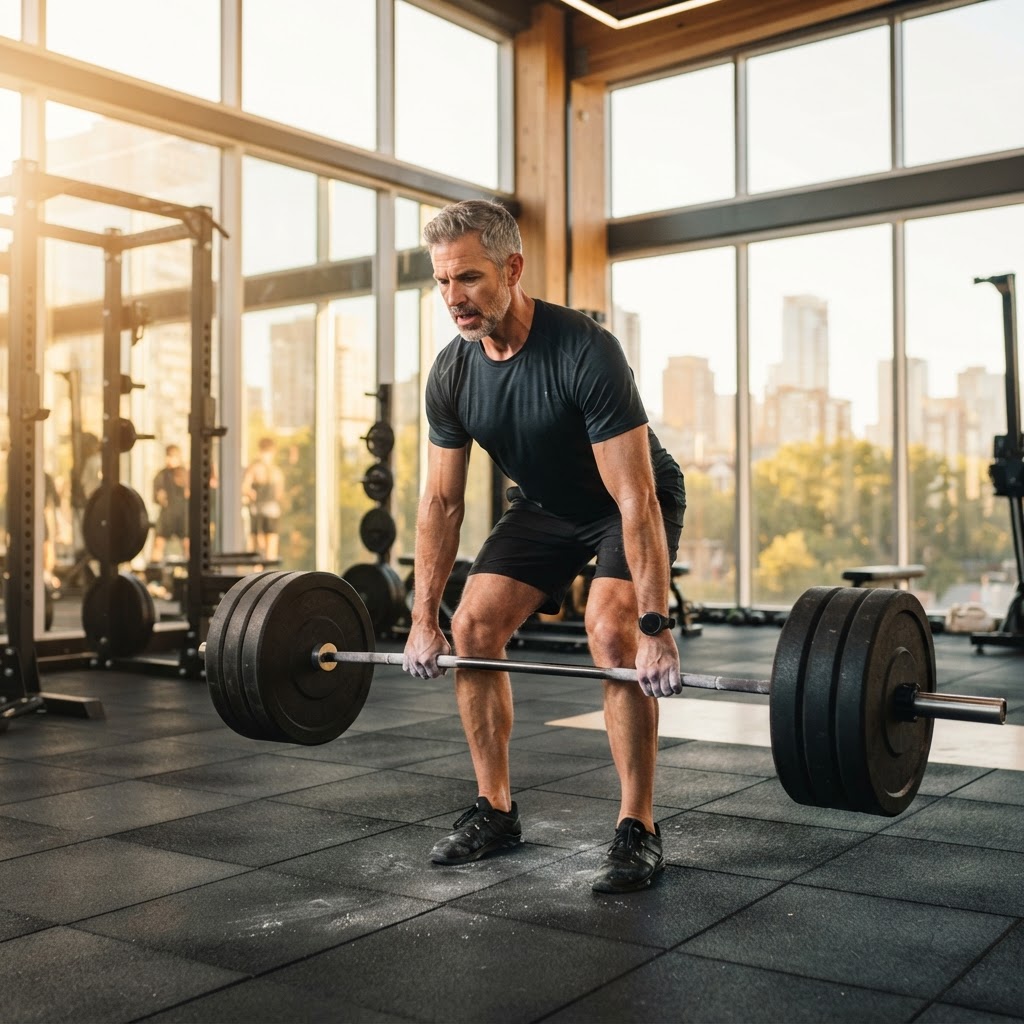
High-intensity resistance training is the strongest natural GH trigger. Compound lifts near fatigue, short rest periods, and interval training all raise GH pulses significantly. The sweet spot: 3-4 hard sessions per week with adequate recovery, since chronic overtraining raises cortisol and suppresses GH. If you are over 40, creatine is one of the best-supported supplements for preserving strength and lean mass (creatine for healthy aging).
Lever 3: Time Your Nutrition
GH is released more easily when insulin is low. Two practical tactics: finish eating 2-3 hours before bed so your overnight GH pulses are not blunted, and consider training fasted or semi-fasted. Keep daily protein high (1.6-2.2 g per kg), because GH only builds muscle when raw material is available. Avoid sugar-heavy late-night snacks; the insulin spike is a direct GH suppressor.
Lever 4: Body Composition and Fasting
GH release is blunted by high body fat, especially visceral fat, so gradual fat loss itself improves your GH profile. Intermittent fasting raises GH pulses modestly by keeping insulin low; a 12-14 hour overnight window is enough for most people and pairs naturally with the early-dinner strategy.
What About Supplements?
Evidence for most “GH booster” supplements is weak. The exceptions worth considering: melatonin (improves sleep onset, mildly increases GH), arginine and glutamine at multi-gram doses before bed (modest, mostly in older adults), and vitamin D for overall hormone support (vitamin D and hormone health). Adaptogens like ashwagandha help mainly by lowering stress hormones (ashwagandha research review). Anything promising dramatic GH increases is marketing, not physiology.
Safety Notes
Genuine HGH injections are prescription-only, carry real risks (insulin resistance, joint pain, edema), and are illegal for anti-aging use in many countries. Natural optimization is slower but sustainable and safe for healthy adults.
The Bottom Line
You cannot stop GH decline, but you can reclaim much of it: protect deep sleep, lift hard 3-4 times a week, finish dinner early, stay lean, and skip late-night sugar. Stack those habits with creatine and magnesium, and recovery after 40 starts looking like it used to.