Tag: estrogen metabolism

  • Thyroid and Weight Gain: The Hidden Connection Explained by Science

    Thyroid and Weight Gain: The Hidden Connection Explained by Science

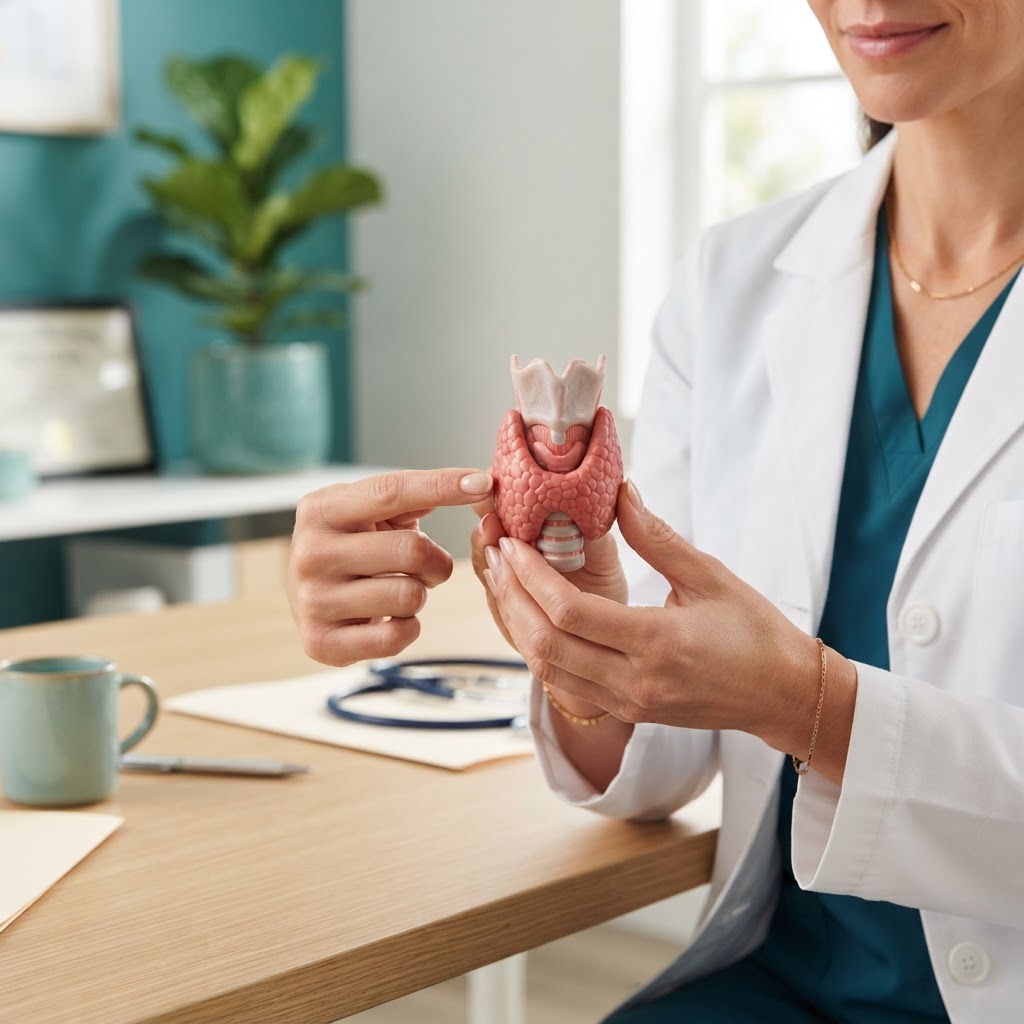
    Unexplained weight gain, fatigue, and feeling cold all the time: for millions of people, especially women over 40, these symptoms trace back to one small butterfly-shaped gland. The thyroid controls your metabolic rate, and when it slows down, everything slows down with it. This guide explains the connection between thyroid function and weight, and what actually helps.

    What the Thyroid Actually Does

    The thyroid produces T4 and T3, hormones that tell every cell in your body how fast to burn energy. When production drops (hypothyroidism), your basal metabolic rate falls, often by 5 to 15 percent. You burn fewer calories at rest, feel colder, tire more easily, and retain water. Much of the early “weight gain” in hypothyroidism is actually fluid retention, but the metabolic slowdown is real.

    Signs Your Thyroid May Be Slowing You Down

    The classic symptoms are fatigue, cold intolerance, dry skin, hair thinning, constipation, brain fog, low mood, and unexplained weight gain. Symptoms are often dismissed as stress or normal aging. Women are five to eight times more likely than men to develop thyroid problems, and risk rises sharply around perimenopause (read our perimenopause nutrition guide), when estrogen shifts can interact with thyroid function. If symptoms overlap with cycle changes, also review our guide to estrogen dominance (estrogen dominance signs and solutions).

    Why Thyroid Problems Make Weight Loss Harder

    Three mechanisms stand out. First, a lower metabolic rate means your maintenance calories drop, so the same diet that once maintained your weight now gains weight. Second, fatigue reduces spontaneous movement and training intensity, shrinking total daily burn. Third, chronic stress and thyroid issues feed each other: elevated cortisol (how to lower cortisol naturally) suppresses the conversion of T4 into the active T3 your cells need.

    Testing: Ask for the Full Panel

    Many doctors test only TSH, the pituitary signal. Ask for TSH, free T4, free T3, and thyroid antibodies (TPO and TG). Antibodies point to Hashimoto’s, the autoimmune cause behind most hypothyroidism in developed countries. Subclinical patterns, where TSH is mildly elevated but T4 is normal, are common and worth monitoring, especially with symptoms.

    Nutrients That Support Thyroid Function

    The thyroid needs specific raw materials: iodine to build hormones, selenium to convert T4 to T3, zinc for that same conversion, and iron to carry hormones into cells. Brazil nuts, eggs, fish, and pumpkin seeds cover most needs. Do not mega-dose iodine without testing, because excess iodine can worsen autoimmune thyroid disease. If you supplement zinc, see our guide on zinc and hormone health (zinc and hormone health).

    Lifestyle Levers That Matter

    Prioritize sleep (7-9 hours, since poor sleep raises cortisol and lowers T3), strength training to preserve metabolic muscle mass, and stress management. Aim for steady blood sugar rather than extreme dieting: very low calorie diets further suppress T3 and can backfire. Adequate protein matters too, especially after 40 (our protein guide for women over 40).

    When to See a Doctor

    If you have two or more symptoms listed here, request a full thyroid panel. If you are already on thyroid medication, take it on an empty stomach, away from coffee, calcium, and iron, and retest 6-8 weeks after any dose change.

    The Bottom Line

    Thyroid dysfunction is common, under-tested, and a legitimate metabolic reason weight loss feels impossible. Test properly, correct nutrient gaps, manage stress, and work with your doctor on treatment if labs confirm it. The scale usually responds once the gland is properly supported.

  • DIM Supplements Explained: How Diindolylmethane Balances Estrogen in Men

    DIM Supplements Explained: How Diindolylmethane Balances Estrogen in Men

    If you’ve been researching testosterone support supplements, you’ve probably come across DIM — short for diindolylmethane. It’s one of the most talked-about compounds in men’s health today, and for good reason. DIM plays a crucial role in how your body processes and eliminates estrogen, making it a game-changer for men looking to optimize their hormonal balance.

    Want a DIM supplement formulated specifically for men?

    👉 Visit the official DIM 3X® website

    https://www.dim3x.com/ct/629051

    (Affiliate link — we may earn a commission at no extra cost to you. Results may vary.)

    In this guide, we’ll break down exactly what DIM is, how it works in the male body, what the science says about its benefits, and how to choose a quality supplement.

    What Is DIM (Diindolylmethane)?

    DIM is a compound your body produces naturally when it breaks down indole-3-carbinol (I3C) — a substance found in cruciferous vegetables like broccoli, Brussels sprouts, cabbage, and kale. When you chew and digest these vegetables, your stomach acid converts I3C into DIM, which then circulates through your system.

    Here’s the problem: you’d need to eat several pounds of cruciferous vegetables daily to get a therapeutic dose of DIM. That’s why supplements have become so popular — they deliver a concentrated, bioavailable form of DIM without requiring you to eat a mountain of broccoli every day.

    How DIM Works in the Male Body

    To understand DIM’s value for men, you need to understand estrogen metabolism. Men produce estrogen too — and it’s essential for bone health, libido, brain function, and cardiovascular health. The problem isn’t estrogen itself; it’s what happens when estrogen metabolism goes off track.

    The Two Pathways of Estrogen Metabolism

    Your body metabolizes estrogen through two main pathways:

    • The “Good” Pathway (2-hydroxyestrone): Produces 2-hydroxyestrone (2-OHE1), a weaker, protective form of estrogen. This is the pathway you want to promote.
    • The “Bad” Pathway (16-alpha-hydroxyestrone): Produces 16-alpha-hydroxyestrone, a stronger, more proliferative form. Higher levels of this metabolite are associated with estrogen dominance and related health concerns.

    DIM shifts the balance. It promotes the 2-hydroxy pathway (good) while reducing the 16-alpha pathway (bad). This is called “favorable estrogen metabolism” — and it’s the core mechanism behind DIM’s benefits for men.

    Key Benefits of DIM for Men

    1. Supports Healthy Testosterone-to-Estrogen Ratio

    By promoting favorable estrogen metabolism, DIM indirectly supports healthy testosterone levels. When excess “bad” estrogen is efficiently cleared, your body’s natural testosterone doesn’t have to compete with elevated estrogen activity. Many men report feeling more energetic, having better workouts, and experiencing improved mood when their estrogen balance is optimized.

    2. Reduces Estrogen Dominance Symptoms

    Estrogen dominance in men can cause stubborn belly fat, reduced libido, mood swings, gynecomastia (enlarged breast tissue), and fatigue. DIM helps by ensuring estrogen is processed through the protective pathway rather than accumulating in its more aggressive form.

    3. Supports Prostate Health

    Research suggests that the 2-hydroxy metabolites promoted by DIM may have protective effects on prostate tissue. The shift toward favorable estrogen metabolism is associated with reduced proliferation of prostate cells, which is why DIM has attracted attention in prostate health research.

    4. May Aid in Body Composition

    Estrogen dominance is linked to increased fat storage, particularly around the chest and midsection. By helping balance estrogen metabolism, DIM may indirectly support fat loss efforts when combined with proper diet and exercise.

    What Does the Science Say?

    Several clinical studies have examined DIM’s effects on estrogen metabolism:

    • A study published in the journal Nutrition and Cancer found that I3C supplementation (which converts to DIM) significantly increased the ratio of 2-hydroxyestrone to 16-alpha-hydroxyestrone in both men and women.
    • Research in Biochemical Pharmacology identified DIM as a modulator of estrogen metabolism that promotes the protective 2-hydroxy pathway.
    • A study in The Journal of Nutrition demonstrated that cruciferous vegetable-derived compounds (including DIM) have measurable effects on estrogen metabolism markers within weeks of supplementation.

    While more large-scale human trials are needed, the existing evidence consistently supports DIM’s role in promoting favorable estrogen metabolism.

    How to Choose a Quality DIM Supplement

    Not all DIM supplements are created equal. Here’s what to look for:

    • Bioavailability: DIM is naturally poorly absorbed. Look for supplements that use enhanced absorption technology (like liposomal delivery or absorption enhancers like BioPerine black pepper extract).
    • Dosage: Clinical studies typically use 100-200mg of DIM per day. Higher doses don’t necessarily mean better results.
    • Third-Party Testing: Choose brands that verify purity and potency through independent lab testing.
    • No Fillers or Junk: Avoid supplements loaded with unnecessary additives, binders, or artificial ingredients.

    One product that checks these boxes is DIM 3X, which uses an enhanced absorption formula specifically designed for men looking to support healthy estrogen metabolism.

    DIM vs. Other Testosterone Support Supplements

    DIM works differently than most testosterone boosters. While products like Testosil focus on stimulating testosterone production directly, DIM focuses on optimizing the estrogen side of the equation. For many men, combining both approaches — supporting testosterone production while ensuring estrogen is metabolized efficiently — produces the best results.

    Think of it this way: testosterone boosters turn up the faucet, while DIM makes sure the drain isn’t clogged. Both are important for maintaining the right hormonal balance.

    Potential Side Effects and Precautions

    DIM is generally well-tolerated, but some men may experience:

    • Mild headaches (particularly in the first few days)
    • Changes in urine color (often darker, which is normal and harmless)
    • Mild digestive upset

    If you’re on hormone-related medications, have a history of hormone-sensitive conditions, or are taking blood thinners, talk to your doctor before starting DIM. As with any supplement, it’s smart to consult your healthcare provider first.

    The Bottom Line

    DIM is one of the most scientifically-backed compounds for supporting healthy estrogen metabolism in men. By shifting estrogen processing toward the protective 2-hydroxy pathway, DIM helps maintain the optimal testosterone-to-estrogen ratio that men need for energy, muscle maintenance, libido, and overall vitality.

    If you’re looking for a DIM supplement specifically formulated for men, DIM 3X is worth considering — it combines bioavailable DIM with absorption-enhancing technology to deliver results you can feel.

    👉 Visit the official DIM 3X® website

    Disclaimer: This article is for informational purposes only and is not medical advice. Always consult with a qualified healthcare professional before starting any supplement regimen.